Top 10 Medical Air Purifiers for Healthier Living Spaces?
In today's world, air quality plays a crucial role in our health. Indoor air can be more polluted than outside air. This is where a medical air purifier becomes essential. These devices are designed to remove harmful particles, allergens, and bacteria from the air. Choosing the right medical air purifier can significantly improve your living space.
With various options available, it can be overwhelming. Some purifiers focus solely on dust and pollen. Others tackle smoke and odors. Not every product is perfect for every home. You may find yourself needing to reconsider your choices.
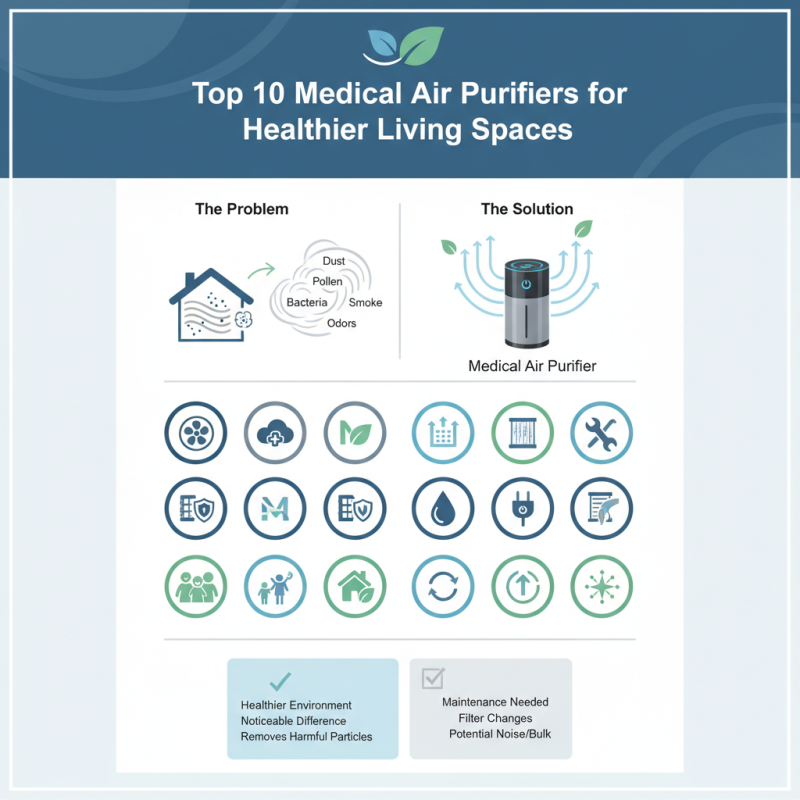
Investing in a medical air purifier is a step towards a healthier environment. The right one can make a noticeable difference. However, proper maintenance and filter changes are necessary. Some models can be noisy or bulky. Despite these minor flaws, the benefits often outweigh the drawbacks.
Introduction to Medical Air Purifiers and Their Importance
Medical air purifiers play a crucial role in maintaining healthier living spaces. These devices are designed to filter out harmful pollutants and allergens from the air. Many people underestimate the significance of clean air. In urban areas, the air quality can be severely compromised. Dust, pollen, and pet dander accumulate easily, leading to respiratory issues.
Using a medical air purifier can help reduce these risks. They often employ advanced filtration systems, such as HEPA filters, to trap particles effectively. This can be particularly beneficial for individuals with allergies or asthma. However, it's important to remember that no device can eliminate all air quality issues. Regular maintenance and replacement of filters are essential.
While medical air purifiers improve indoor air quality, they are not a cure-all. They should complement other health practices, like proper ventilation and consistent cleaning. It’s essential for users to remain aware of their surroundings. Sometimes, the effectiveness of an air purifier may wane over time. Being mindful of air quality and taking proactive steps can lead to a healthier living environment.
Criteria for Selecting the Best Medical Air Purifiers
When selecting the best medical air purifiers, understanding key criteria is crucial. First, consider the filter type. HEPA filters are essential. They capture up to 99.97% of particles as small as 0.3 microns. This includes dust, pollen, and some bacteria. A study by the American Journal of Respiratory and Critical Care Medicine highlights that improving indoor air quality can significantly reduce respiratory diseases.
Next, evaluate the Clean Air Delivery Rate (CADR). This metric indicates how effectively a purifier works. The higher the CADR, the quicker it cleans the air. Research by the Environmental Protection Agency shows that purifiers with higher CADR ratings lead to noticeably better air quality in just a matter of hours. It's important to choose a model appropriate for the room size.
Noise level is also a factor to weigh. Some purifiers can be quite loud, potentially disrupting your daily life. According to the Journal of the Acoustical Society of America, noise can lead to stress and reduced focus. A balance between efficiency and sound is necessary to maintain a healthy living environment. Identify your specific needs to find the right fit.
Top Features to Look for in Medical Air Purifiers
When selecting a medical air purifier, it's crucial to consider several key features to ensure a healthier living space. High Efficiency Particulate Air (HEPA) filters are essential. They can remove up to 99.97% of particles as small as 0.3 microns. This includes dust, pollen, and even some bacteria. According to a report from the American Lung Association, cleaner air is linked to better respiratory health, especially for vulnerable populations.
Another important feature is the presence of activated carbon filters. These filters are effective in capturing odors and harmful gases from the air. A study by the Environmental Protection Agency highlights the impact that indoor air pollution has on health. Reducing volatile organic compounds (VOCs) can significantly lower the risk of headaches and respiratory issues.
Additionally, consider air purifiers with real-time air quality monitoring. This feature helps users track pollutant levels dynamically. It can be easy to overlook the importance of maintenance, too. Frequent filter changes are necessary to ensure optimal function. Many users forget to replace filters regularly, which can lead to decreased purification effectiveness. Thus, incorporating these features can greatly enhance the air quality in your home.
Review of the Top 10 Medical Air Purifiers
When looking for a medical air purifier, several factors come into play. These devices are designed to remove harmful particles from the air. Most models filter allergens, dust, and bacteria effectively. However, not all purifiers are the same. Some may lack the necessary filtration efficiency. Users should carefully review specifications before purchasing.
Comparing multiple units can reveal stark differences. Many air purifiers come with HEPA filters. These are known for trapping small particles, offering a healthier living environment. However, some models do not provide true HEPA filtration. This can be misleading for consumers seeking clean air.
Noise levels are another important consideration. Many prefer a quiet operation, especially for bedrooms. Yet, some air purifiers can be surprisingly loud. This can disrupt sleep and cause frustration. Overall, understanding these details can help make an informed decision about which medical air purifier best suits individual needs.
Comparative Analysis: Performance and Effectiveness of Top Choices
When evaluating medical air purifiers, effectiveness is key. Studies show indoor air can be five times more polluted than outdoor air. This pollution impacts health, leading to respiratory issues. An effective air purifier can significantly reduce particulate matter. High-Efficiency Particulate Air (HEPA) filters capture up to 99.97% of particles that are 0.3 microns or larger. This includes dust, pollen, and smoke.
Performance varies among purifiers. Some models offer impressive Clean Air Delivery Rate (CADR) scores. Higher CADR means better performance in a larger space. Reports indicate that a unit with a CADR of 300 can purify a 700 square foot room efficiently. However, many users often overlook the noise levels. A quiet model is crucial for nighttime use.
Not all purifiers target volatile organic compounds (VOCs). Data reveals that these chemicals can cause serious health effects. Those sensitive to chemicals need a purifier with activated carbon filters. Yet, there's no one-size-fits-all solution. Regular maintenance is essential for sustained performance. Many users forget to replace filters, undermining effectiveness. The right choice depends on individual needs and living conditions.
Top 10 Medical Air Purifiers Performance Analysis