Why Choose an FRP Pipe Machine for Your Industrial Needs?
In today's industrial landscape, the demand for durable and cost-effective piping solutions is on the rise. A recent report by Global Market Insights indicates that the FRP pipe market is expected to reach $6 billion by 2026, driven by the need for lightweight and corrosion-resistant materials. The frp pipe machine plays a crucial role in this growth, enabling manufacturers to produce pipes that meet diverse industrial requirements.
Leading industry expert Dr. John Smith emphasizes, “Investing in an frp pipe machine can significantly enhance production efficiency and reduce long-term costs.” This statement highlights the machine’s ability to streamline operations while maintaining high-quality output. However, not all companies may recognize its potential. Some may overlook initial investment costs or operational complexities, which can lead to missed opportunities.
Adopting an FRP pipe machine comes with challenges. Businesses need to consider trained personnel, maintenance requirements, and market adaptability. Despite these hurdles, the advantages—like increased longevity and reduced weight—make it a compelling option for many industries. As the market evolves, continuous reflection on these aspects will be essential for maximizing the technology's benefits.
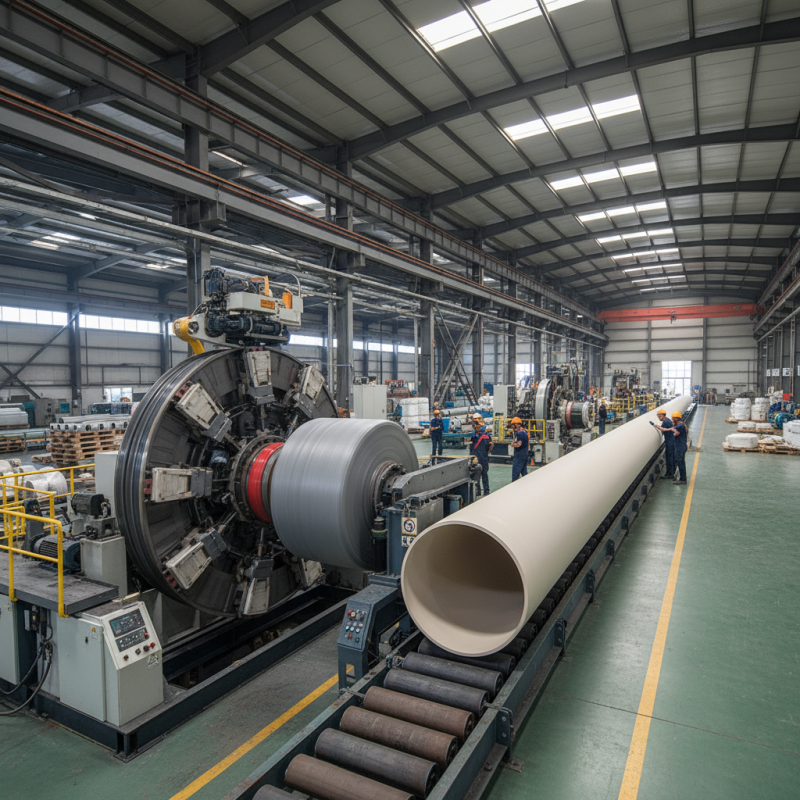
Benefits of Using FRP Pipe Machines in Industrial Applications
FRP (Fiber Reinforced Plastic) pipe machines are increasingly popular in industrial applications. They offer unique advantages over traditional materials. For instance, the corrosion resistance of FRP can extend the lifespan of pipes significantly. Some studies suggest that FRP pipes can last up to 50 years, compared to just 10-20 years for steel pipes. This longevity reduces the need for frequent replacements, ultimately saving costs.
In addition, FRP pipes are lightweight and easy to install. This reduces transportation costs and labor expenses. A recent report highlighted that the overall installation costs of FRP systems can be reduced by 25% due to their light weight. However, while the benefits are clear, companies must also consider the initial investment. FRP machines can be more expensive to procure than traditional systems.
Moreover, it is essential to focus on the production quality. The consistency of pipe thickness is critical for performance. Reports indicate that improper manufacturing can lead to weak points. Addressing these challenges should be a priority. Companies must weigh the upfront costs against long-term benefits. Balancing these factors can lead to more informed decisions.
Key Features of FRP Pipe Machines to Consider
When it comes to industrial needs, choosing an FRP pipe machine can be a game changer. FRP stands for Fiber Reinforced Polymer. These machines excel in producing lightweight, corrosion-resistant pipes. This makes them ideal for various industries. Consider their ability to handle complex designs. Lightweight yet durable, FRP pipes can be used in challenging environments.
Key features of FRP pipe machines are important. Look for machines with advanced control systems. This ensures precise production and reduces waste. The speed of the machine also matters. A faster machine boosts productivity. However, think about the machine's maintenance needs. Regular upkeep is essential to avoid downtime.
Tips: Always assess the machine's energy efficiency. An efficient machine will reduce operating costs. Also, consider the versatility of production capabilities. Can the machine handle different sizes and shapes? This adaptability can save future investment. Lastly, seek user-friendly designs. Complex interfaces can lead to errors. Simplicity is often a sign of thoughtful engineering.
Key Features of FRP Pipe Machines
This chart illustrates the key features of FRP pipe machines and their ratings based on common criteria important for industrial applications. The features include Durability, Weight, Corrosion Resistance, Production Rate, and Cost Efficiency.
Comparative Analysis: FRP Pipes vs. Traditional Materials
When considering piping materials, FRP pipes stand out for industrial applications. They are lightweight yet strong. Unlike traditional materials such as steel or PVC, FRP pipes resist corrosion. This feature makes them ideal for harsh environments. They perform well in chemical processing and water treatment facilities.
However, not all industries may find FRP suitable. Some require higher temperature tolerance. Traditional materials like steel can withstand extreme conditions better. There may also be initial cost challenges when selecting FRP. It’s essential to weigh long-term benefits against upfront investments.
Moreover, installation can be tricky with FRP. It needs specialized techniques and training. This adds complexity to the process. It’s important to reflect on these factors before making a decision. In some cases, a hybrid approach may yield better results. Balancing the advantages and limitations of both FRP and traditional materials can lead to optimal choices for unique industrial needs.
Why Choose an FRP Pipe Machine for Your Industrial Needs? - Comparative Analysis: FRP Pipes vs. Traditional Materials
| Criteria | FRP Pipes | Traditional Materials |
| Weight | Lightweight | Heavy |
| Corrosion Resistance | Excellent | Moderate to Poor |
| Lifespan | Over 50 years | Approximately 10-30 years |
| Installation Cost | Lower | Higher |
| Thermal Conductivity | Low | High |
| Maintenance Requirement | Minimal | Regular Maintenance Needed |
| Environmental Impact | Recyclable | Less Recyclable |
Understanding the Manufacturing Process of FRP Pipes
The manufacturing process of FRP (Fiberglass Reinforced Plastic) pipes is intricate and requires precision. It begins with the preparation of resin and fiberglass materials. The resin acts as a binder, while fiberglass provides strength. These components must be mixed properly, ensuring a uniform consistency. This step is crucial; if not done correctly, the final product may lack durability.
Next, the mixture is applied to a mold. There are various techniques for this, including hand lay-up and pultrusion. Each method has its pros and cons. Hand lay-up can be labor-intensive, yet it allows for customization. On the other hand, pultrusion offers efficiency but might not accommodate complex designs. The choice of technique shapes the final output, demanding careful thought about project requirements.
After curing, the pipes undergo rigorous testing. This stage assesses durability and resistance to chemicals. Though the process is thorough, imperfections can still arise. Occasionally, pipes may have voids or inconsistencies. Identifying these flaws ensures only high-quality products reach the market. Ultimately, understanding the manufacturing process helps enhance the reliability of FRP pipes in various industries.
Cost-Effectiveness of FRP Pipe Machines for Long-Term Investment
Investing in an FRP pipe machine can lead to significant long-term savings for businesses. According to industry reports, the total cost of ownership for FRP systems is often lower than traditional materials. This is largely due to their durability and resistance to corrosion, which reduces maintenance costs. For instance, FRP pipes can last three to five times longer than metal pipes, depending on the application. This longevity is critical for companies aiming to optimize their operational budgets.
Moreover, the initial investment in an FRP pipe machine might seem high. However, when we factor in lower operational and maintenance costs, the long-term financial benefits become clear. A study by the Composite Industry Association highlights that companies experience an average of 20% reduction in total maintenance costs after switching to FRP pipes. This allows for reallocation of resources, improving overall efficiency.
Despite these advantages, some businesses remain hesitant due to the upfront costs. It's essential to assess the long-term ROI instead of focusing solely on short-term expenditures. Many organizations acknowledge that reevaluating their financial strategies can uncover the true value of FRP technology. As the market evolves, understanding these dynamics can empower smarter investment decisions.
