Best Strong Base Anion Resin for Water Treatment Applications?
In the realm of water treatment, the selection of the right materials is critical. Among these, strong base anion resins play a vital role. Dr. Emily Carter, an expert in water purification technologies, once noted, "The effectiveness of strong base anion resin can significantly impact the overall treatment efficiency."
strong base anion resins are favored for their ability to remove contaminants from water. These resins work by exchanging anions in the water, thus enhancing its purity. However, choosing the best option can be challenging. The diversity of resins on the market complicates decision-making. Each resin has unique properties, affecting its performance in specific applications.
Some users have reported mixed experiences with certain resins. A resin that works well for one application may underperform in another. This variability prompts a need for further research and testing. Matching the right strong base anion resin to a specific treatment goal remains a task that requires careful consideration. Overall, understanding their nuances can lead to improved water quality outcomes, something that deserves ongoing exploration.
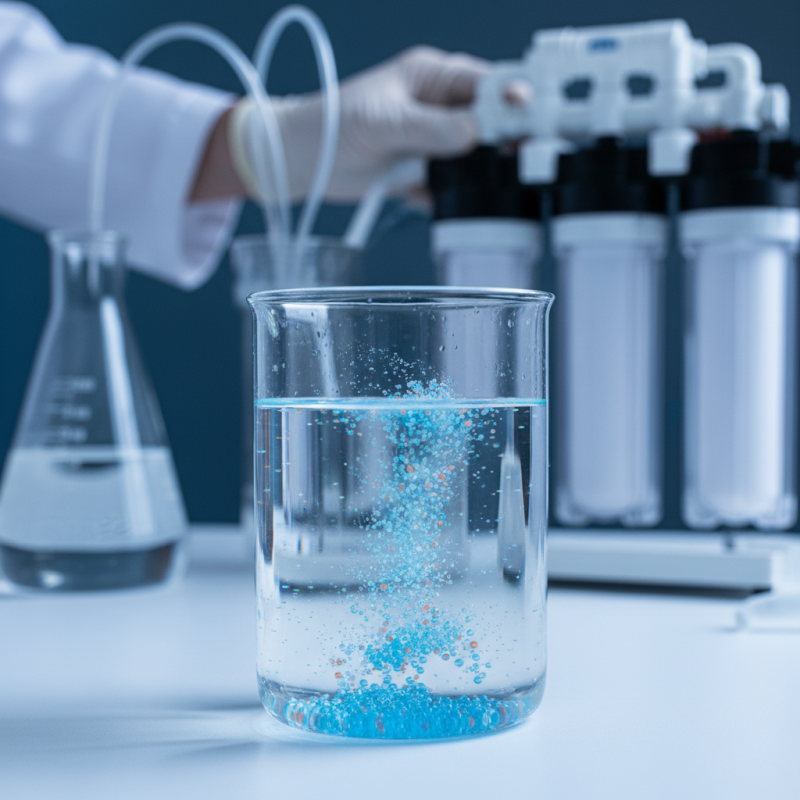
Overview of Strong Base Anion Resins in Water Treatment
Strong base anion resins play a crucial role in water treatment applications. These resins are effective in removing contaminants from water. They work by exchanging anions with charged particles in the water. This process reduces harmful substances. The efficiency of these resins highly depends on their chemical structure and formulation.
Choosing the right resin is essential for optimal results. Different resins have varying capacities and selectivity. Some perform better in specific conditions, such as high temperatures. Others excel with certain anions. It’s important to consider these factors before making a decision. Sometimes, the exact choice may not align with expectations. This can lead to inefficiencies in treatment processes.
Operators might face challenges during usage. Resin fouling can occur, impacting performance. Regular maintenance is vital but often neglected. Not addressing these issues can hinder water treatment efficacy. Experimentation and adjustments are sometimes necessary to achieve better results. It’s a continuous learning process in the treatment journey.
Key Properties of Strong Base Anion Resins
When considering strong base anion resins for water treatment, certain properties are crucial. These resins work effectively in removing contaminants. Their ability to function at a wide pH range is essential. High chemical stability is another important factor. This stability enables the resin to endure harsh conditions during treatment processes.
Tips: Regular testing of the resin's performance can ensure optimal results. Watch for signs of resin bed exhaustion. Early detection is key to maintaining water quality.
Another important property is the ion exchange capacity. A high capacity allows for better removal of anions. This can significantly improve water purity levels. Additionally, particle size impacts the flow rate and filtration efficiency. Smaller particles may lead to better contact but can also cause pressure drops.
Tips: Be aware of the trade-off between particle size and flow rates. Balancing these will enhance efficiency. Always consider the specific application when selecting resin types.
An important, yet often overlooked aspect, is regeneration. Resins need periodic regeneration to maintain effectiveness. Not all methods work for every resin type. Understanding the unique needs of each resin will lead to better performance in water treatment applications.
Common Applications of Strong Base Anion Resins in Water Treatment
Strong base anion resins play a vital role in water treatment. They effectively remove contaminants and improve water quality. Common applications include deionization, wastewater treatment, and drinking water purification. These resins are especially good at removing negatively charged ions, like sulfate and nitrate. Their efficiency in ion exchange contributes significantly to cleaner water.
In industrial settings, strong base anion resins are used to treat process water. They help in reducing the scale formation in boilers and cooling towers. The resins capture unwanted ions that could harm equipment. In municipal systems, they are crucial for meeting regulatory standards for safe drinking water. Their ability to remove dissolved organic matter is essential for public health.
However, it’s worth noting that not all applications yield perfect results. Resin regeneration can be costly and time-consuming. Sometimes, resins can be ineffective against certain contaminants. Users must regularly monitor the performance of the resin. This ensures that water treatment goals are consistently met. Hence, proper maintenance is crucial for optimal performance.
Comparative Analysis of Leading Strong Base Anion Resin Brands
When selecting strong base anion resins for water treatment, several factors arise. Different resins offer unique properties that suit various applications. For instance, one resin may excel in removing specific contaminants but may have limitations in others. It is essential to understand these variations.
Comparing various brands reveals both strengths and weaknesses. Some resins might have a higher exchange capacity. However, their operational stability could be questionable. Others may perform well in specific pH ranges, making them less versatile. Evaluating factors like regeneration efficiency is also crucial. A resin that releases ions inefficiently may lead to increased operational costs. Each resin demands careful consideration of overall performance and application suitability.
Testing and field results often indicate that no single resin is perfect. Industry professionals frequently face trade-offs. In some scenarios, a less popular resin outperforms market leaders in niche applications. Choosing the right strong base anion resin requires a deep understanding of both the technology and the specific water treatment needs. This detailed analysis plays a pivotal role in achieving optimal results.
Best Strong Base Anion Resin for Water Treatment Applications
| Resin Type | Exchange Capacity (meq/mL) | Operating Temperature (°C) | Particle Size (µm) | pH Stability |
| Type I Strong Base Anion | 1.5 | 0-100 | 300-1200 | 1-14 |
| Type II Strong Base Anion | 1.6 | 0-120 | 400-800 | 1-14 |
| Macroporous Type I | 1.4 | 0-90 | 300-1000 | 2-12 |
| Macroporous Type II | 1.7 | 0-110 | 500-900 | 2-11 |
| Crosslinked Anion Resin | 1.8 | 0-95 | 400-1100 | 2-12 |
Selection Criteria for the Best Strong Base Anion Resin
Selecting the best strong base anion resin for water treatment is crucial. The selection criteria can significantly affect performance. Key factors include the resin's capacity, exchange kinetics, and operating environment. High capacity ensures effective ion removal, improving overall efficiency. Kinetics determine how quickly ions are exchanged. This speed matters in fast-flowing applications.
Another crucial aspect is the pH range compatibility. Resins work differently across pH levels. Understanding the specific water chemistry is vital. Some may falter in extreme pH conditions. Additionally, consider the temperature limits of the resin. Elevated temperatures might degrade weaker resins. It's an area often overlooked.
Cost is a factor too. Higher performance may come with a price. Balancing budget and effectiveness can be challenging. Reviewing long-term costs against initial expenses is essential. Users may find that cheaper options lead to more frequent replacements. This situation requires careful thought. Make informed choices to find a resin that meets your specific needs and conditions.
