Best Switching Power Supply Options for Your Needs?
When searching for the best Switching Power Supply options, it's essential to consider your specific needs. A Switching Power Supply is a key component in many electronic devices. These power supplies convert electrical power efficiently and effectively, offering numerous advantages.
Different devices require different power specifications. Not all Switching Power Supplies can meet these demands equally. Users often overlook voltage ratings and current requirements. This can lead to issues like device malfunction or reduced performance. Sometimes, the ideal choice may not be the most popular model on the market. Exploring less known options can reveal hidden gems.
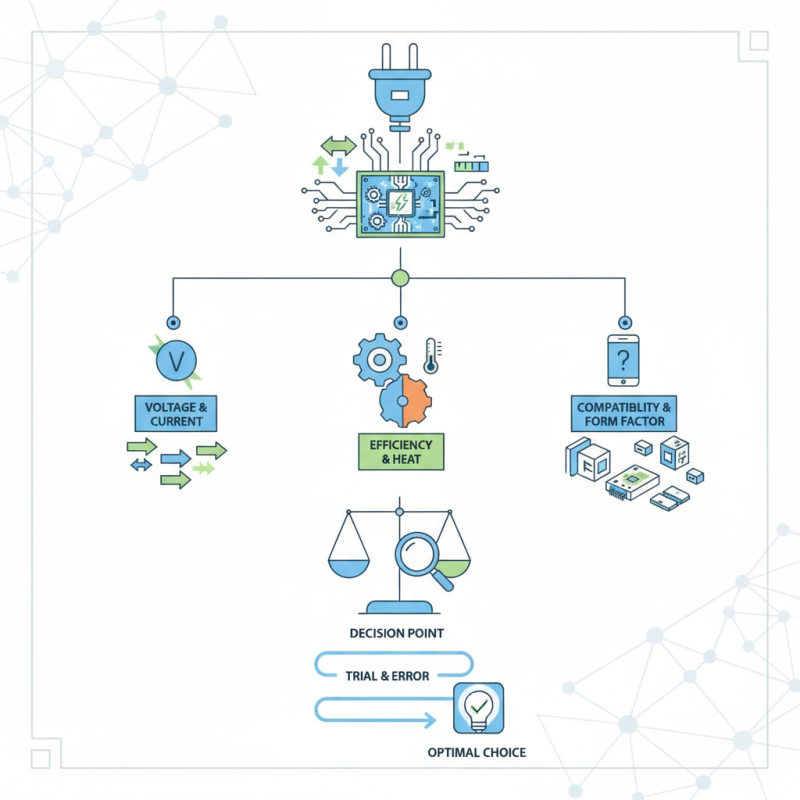
Reflecting on the design and compatibility is crucial when selecting a Switching Power Supply. Not all supplies operate silently, and some may generate heat. It's important to weigh these factors against your specific applications. Understanding the balance between efficiency and form factor is vital. Ultimately, finding the right Switching Power Supply may require careful consideration and sometimes, trial and error.
Understanding Switching Power Supplies: A Comprehensive Overview
Switching power supplies are essential in modern electronics. These devices convert electrical power efficiently. They operate by switching on and off quickly, which saves energy. This type of power supply is lightweight and compact. It uses less material, making it favorable for various applications.
Understanding the core components is crucial. The input stage rectifies AC to DC. The high-frequency transformer steps down voltage. Finally, filters smooth the output. Each part plays a vital role in performance. However, not all designs are perfect. Some may introduce noise into circuits. This can be a major drawback in sensitive applications. Testing and troubleshooting can be time-consuming.
Choosing the right switching power supply can be challenging. You must consider your specific needs. Look for features like output stability and efficiency ratings. You might discover that some options lack adequate protections. This can lead to overheating or failure. Always evaluate your requirements before making a decision.
Key Factors to Consider When Choosing a Switching Power Supply
When selecting a switching power supply, several key factors come into play. First, consider the output voltage and current requirements. Ensure the power supply can handle the power your devices need. You may want a bit of headroom for future expansion. It’s tempting to get exactly what you need, but a little extra can provide flexibility.
Efficiency is another critical factor. Higher efficiency means less energy wasted as heat. This not only saves on electricity costs but also increases the lifespan of your components. Aim for a unit with at least 80% efficiency. However, remember that efficiency ratings can be misleading. They might only apply at certain loads, so verify performance across a range of conditions.
Noise levels in power supplies matter too. Some units can introduce electrical noise that disrupts sensitive equipment. If you're using your power supply for audio or high-precision tasks, opt for a model specifically designed to minimize noise. Evaluating noise performance requires careful testing, as specifications might not always tell the whole story. Each detail matters when ensuring your power supply meets your unique needs.
Types of Switching Power Supplies and Their Applications
Switching power supplies are vital in many applications. They are efficient and compact. Understanding the types of switching power supplies can help you choose the right one for your needs.
Common types include buck converters, boost converters, and flyback converters. Buck converters step down voltage efficiently and are often used in battery chargers. Boost converters, on the other hand, increase voltage, making them ideal for LED drivers. Flyback converters provide isolation and are commonly seen in power supplies for televisions and various electronics.
These converters are not without flaws. Designing them requires careful consideration of switching frequencies and circuit layouts. The choice of components can significantly affect performance. Programming them can be challenging for beginners. Understanding the specific requirements of your project is crucial. It's easy to overlook essential details in the design phase, leading to inefficient power supply solutions.
Best Switching Power Supply Options for Your Needs
This chart illustrates the various types of switching power supplies and their applications, showing the estimated efficiency percentage for each type. Efficient power supply options are crucial for maximizing performance in electronic devices.
Evaluating Efficiency and Performance in Power Supplies
When evaluating power supplies, efficiency is crucial. An efficient power supply minimizes energy loss, translating into cost savings and lower heat production. Look for a unit with a high efficiency rating. This ensures you get the most power for your energy investment.
Consider performance as well. A high-performing power supply provides stable voltage and current. This stability is vital for maintaining the longevity of your devices. If the output fluctuates, it can lead to failure or reduced lifespan of components.
**Tip:** Always check the load rating and ensure your supply can handle the maximum demands of your devices.
Noise is another aspect to think about. A power supply can introduce electrical noise, impacting sensitive electronics. Use power supplies with good filtering to reduce this issue.
**Tip:** Don’t overlook the importance of ventilation. Ensure that your power supply has adequate airflow to prevent overheating.
Best Switching Power Supply Options for Your Needs
| Model | Power Output (W) | Efficiency (%) | Form Factor | Features |
| Model A | 500 | 90 | ATX | Over Voltage Protection, Short Circuit Protection |
| Model B | 750 | 92 | SFX | Modular, Active PFC |
| Model C | 1000 | 94 | Full Tower | Fan Control, Full Modular |
| Model D | 1200 | 88 | ATX | Over Current Protection, Active PFC |
Top Brands and Models in the Switching Power Supply Market
When considering switching power supply options, it's essential to know the top brands and models in the market. Quality matters, especially when it comes to efficiency and reliability. Look for models with good reviews. Some may excel in compactness, while others shine in power output. It's crucial to assess your specific needs before making a choice.
Tips for choosing a power supply: Always check the wattage requirements of your devices. Ensure the supply can handle the load. Remember, a higher efficiency rating generally leads to lower energy bills. Don't underestimate the importance of cooling features. Overheating can shorten the lifespan of your equipment.
In the search for the right unit, consider whether you need a modular design. A modular power supply allows for a cleaner setup with fewer cables. Small changes, like better cable management, can significantly enhance airflow. Reflect on your setup's aesthetics; neatness can improve your overall experience.
